
Key Takeaways
- If the house has already been sold at a Spartanburg County delinquent tax sale, it is usually not over. State law gives twelve months from the sale date to redeem, and it allows a buyer from the owner to redeem as well, which means selling during that window is still possible.
- If a house sells at a tax sale for more than the taxes and costs owed, that surplus belongs to the former owner. It is not sent out automatically. It has to be claimed from the county.
- Only two Spartanburg neighborhoods, Hampton Heights and Beaumont Mill Village, are locally designated historic districts where the city reviews exterior work. Converse Heights is on the National Register, which is a different thing and carries no city review.
- A Spartanburg mailing address does not mean the house is in the city. Boiling Springs, Roebuck and Converse are unincorporated, so the county alone governs them.
- Owners aged 65 or over, or totally and permanently disabled, or legally blind, can have the first fifty thousand dollars of value exempted from property tax. It is applied for through the county auditor, and failing to apply waives it for that year.
- A cash offer will come in below what a repaired house would fetch on the open market. If the house is sound and you have time to prepare and show it, an agent will usually net you more. If you want the sequence, here is how the process works.
Spartanburg Houses, In Practice
Three things about Spartanburg change how a house sells here. The older stock sits in early twentieth century neighborhoods and former mill villages, where the expensive problems are structural rather than cosmetic. The Piedmont clay and the rainfall attack those houses from underneath. And a large share of addresses that read Spartanburg are not inside the city limits at all.
What Kind of Houses Are We Talking About?
Hampton Heights, developed between 1890 and 1930, is the oldest residential neighborhood in the city, and the surrounding area holds a series of former mill villages built for textile workers: Beaumont, Saxon, Arkwright, Whitney, Converse, Clifton, Glendale. Those houses were built small, built quickly, and built a century ago.
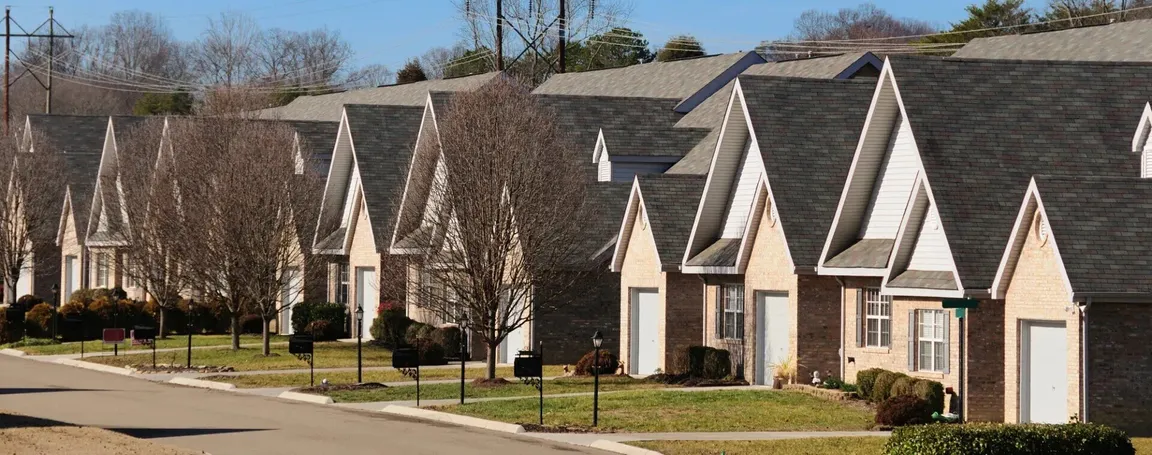
Further out the pattern changes. Fairforest, Valley Falls, Drayton and the corridors between them hold post-war ranches and split levels from the 1950s through the 1970s, where the issue is rarely the structure and usually the systems. North and west it becomes newer subdivisions out toward Boiling Springs and Duncan.
The county has a split economy sitting on top of all this, and it shows up in who is selling. The old textile corridor produced generations of small family houses now held by heirs or by owners who have been in them forty or fifty years. The manufacturing and logistics corridor along I-85 and I-26, around the BMW plant and the inland port at Greer, has driven newer development and a rental market on the northern side of the county.
Why Do Houses Here Fail From Underneath?
Spartanburg sits in the Piedmont on deep red clay, and the county takes just under fifty inches of rain in an average year. Clay holds water rather than shedding it, so a crawlspace under a house built before anybody used a vapor barrier stays damp most of the year, and a damp crawlspace in a humid climate is where the expensive problems start.
What that produces, typically, is fungal decay in the original heart pine sills and floor joists, brick or stone pier foundations that settle unevenly as the clay swells and shrinks through the seasons, and termite activity that has been going on quietly for a long time. None of it is visible from the street and none of it shows up in a listing photograph.
The winters matter too. Unlike the coast, the Upstate freezes, and a freeze-thaw cycle works on an old roof, on shallow footings, and on any plumbing run through an uninsulated crawlspace. A thirty year old roof with two or three layers of asphalt on it can look serviceable and still be hiding deteriorated decking underneath.
What Usually Stops a Bank Lending on One of These Houses?
The systems, not the kitchen. In houses of this era the recurring findings are original knob and tube or early cloth insulated wiring with no ground, service panels of sixty amps or fuse boxes that will not carry a modern load, galvanized steel supply lines closed up with mineral scale, and cast iron drain lines at the end of their life. Add asbestos containing siding shingles, common on mill worker housing from the 1920s through the 1940s, and the picture gets clearer.
This is the practical reason so many Spartanburg houses end up sold for cash. A buyer using conventional, FHA or VA financing needs the house to appraise and to satisfy the lender’s minimum condition requirements. A house with a sixty amp panel, active moisture under the floor and a roof at the end of its life frequently fails one or both, and the deal collapses after the seller has already spent money and six weeks.
It is not that the house cannot be sold. It is that the pool of buyers who can actually complete narrows sharply.
Is Your Address Actually Inside the City of Spartanburg?
Often not, and it matters more than people expect. Boiling Springs, Roebuck, Converse, Arkwright, Saxon, Whitney, Glendale and Clifton are census designated places, which is the Census Bureau’s term for a settled community everybody knows by name but which has never been incorporated. Duncan, Lyman, Inman, Woodruff, Cowpens and Landrum are separate incorporated towns with their own governments.
The practical consequences: whether a city code enforcement department or the county has jurisdiction over a violation notice, whether city property tax millage applies on top of county millage, and whether the historic design review described in the next section applies to the property at all.
What the County and the City Require Before a House Changes Hands
Four local processes decide what is possible. If property taxes went unpaid, the county tax sale calendar and a twelve month redemption clock govern the timing. If the house sits in one of two locally designated historic districts, the city reviews exterior work before a permit is issued. If the owner is 65 or over there may be a tax exemption going unclaimed. And whether the city or the county enforces a code notice depends on which side of the city line the property sits.
If the House Was Sold at a Tax Sale, Is It Too Late to Sell?
Usually not. Spartanburg County typically holds its delinquent tax sale in November, and the property itself is sold rather than just a lien. But the sale does not immediately end ownership. South Carolina gives twelve months from the date of the sale for the property to be redeemed, and the statute is deliberately broad about who can do it: the defaulting taxpayer, any grantee from the owner, or any mortgage or judgment creditor.
That phrase, a grantee from the owner, is the part almost nobody knows. It means an owner can still sell during the redemption window and the buyer can redeem the property.
The cost of redeeming climbs through the year. Interest runs at three percent of the bid amount in the first three months, six percent in months four to six, nine percent in months seven to nine, and twelve percent in the final three. There is a ceiling: the interest charged cannot exceed the amount of the bid entered on behalf of the county’s forfeited land commission.
What redeeming costs at different points in the year
| Item | Value |
|---|---|
| Winning bid at the November sale | 9,000 dollars |
| Redeeming in February, month four, at six percent | 540 dollars on top of the 9,000 |
| Redeeming the following October, month eleven, at twelve percent | 1,080 dollars on top of the 9,000 |
| After twelve months with no redemption | The tax collector issues a tax deed to the bidder |
Worth knowing what that deed is: it is not a warranted deed, it conveys only the interest held, and the county makes no representation about condition or value. If you are still inside the window, you have options. Once the deed issues, you generally do not.
What Happens to the Money Above What Was Owed?
It belongs to the former owner, and this is the single most commonly missed entitlement in the whole process. When a property is bid up at a tax sale beyond the taxes, penalties and costs due, the difference is called the overage. South Carolina law provides for the former owner to claim it, and Spartanburg County publishes a claim form for exactly that purpose. Under the statute the overage becomes payable ninety days after the deed is executed, unless another claimant starts a court action in that time.
If this describes you, go and check it before you do anything else, including talking to any buyer. Nobody sends this money out automatically, and there are people in this county owed a surplus from a sale years ago who have never claimed it. The tax collector’s office can tell you whether an overage exists on a parcel. It costs a phone call.
Does the City Have to Approve Work on the Outside of the House?
Only in two neighborhoods, and the distinction trips up almost everyone. The City of Spartanburg has two locally designated historic districts, Hampton Heights and Beaumont Mill Village. In those, the Historic Architecture and Review Board reviews proposed exterior changes, additions and new construction against the city’s design guidelines, and a Certificate of Appropriateness has to be issued before a building permit. Minor works can be approved by city staff. Major works go to the board. Ordinary maintenance and repair are not reviewed.
Converse Heights is the one people get wrong. It is listed on the National Register of Historic Places, with hundreds of contributing buildings, and that listing is a federal recognition of significance. It is not a local designation, and on its own it does not require a private owner to obtain city approval for exterior work.
Why a seller should care: it shapes what a renovation buyer can actually do with the property, and therefore how they price it and how long their due diligence takes. Downtown has a separate Design Review Board under the city’s Downtown Design Code.
If the Taxes Have Become Unmanageable, Check This Before Anything Else
South Carolina exempts the first fifty thousand dollars of a home’s fair market value from property tax entirely for owners who are 65 or older, or totally and permanently disabled, or legally blind. It is called the homestead exemption and it is separate from the four percent legal residence ratio, which is the other thing an owner living in their own house should be on.
Two details cost people money. It is applied for through the county auditor, not the assessor, which is the single most common filing error, and the two are different offices. And failing to apply is treated as waiving it for that year: nobody applies for you, and it is not backdated because you did not know. The auditor’s office publishes the filing deadline for the tax year, so call and confirm it rather than assuming.
If rising property taxes are part of why selling is on the table, find out whether you are already entitled to this before you decide anything. The Spartanburg County Auditor’s office can tell you on the phone whether the exemption is on your parcel. Some owners are paying tax on value that should not be taxed at all, and correcting that is a smaller step than selling a house.
Who Enforces a Code Violation, the City or the County?
It depends entirely on which side of the city line the property sits, which is why the question above about city limits is not academic. Inside the corporate limits, the City of Spartanburg administers its own zoning ordinance and property maintenance provisions from City Hall on West Broad Street, and it has a separate Downtown Code, adopted in 2021, that applies in the downtown districts. Outside the limits, in the unincorporated county, Spartanburg County Building Codes operates independently from its own offices on Broadcast Drive.
For somebody selling, the thing that matters is that an unresolved notice does not disappear at closing. It travels with the property, and depending on what it is and how long it has been outstanding it can end up as a charge against the property that has to be dealt with before title is clear. If a notice has been received, say so early.
Selling a Pre-1978 House Carries a Federal Disclosure Duty
Most of this housing stock predates 1978, which brings a federal obligation into the sale. Before a buyer is committed under the contract, a seller of most pre-1978 housing has to disclose any known lead based paint and hazards, hand over any available records or reports, provide the EPA information pamphlet, attach the standard lead warning statement to the contract, and give the buyer a ten day opportunity to have the property inspected for lead hazards.
Two conditions worth knowing. The ten day period can be changed if both parties agree to a different one in writing. And foreclosure sales are exempt from the rule. It applies whoever the buyer is, and none of it stops a sale. It is paperwork that has to be done properly rather than a barrier.
This page is general educational information, not legal, tax, or engineering advice. Peak Home Buyers does not practice law and does not give tax advice. Tax sale deadlines, redemption amounts, overage claims, exemption eligibility, historic district requirements, code notices, and disclosure obligations should be confirmed with the Spartanburg County Office of the Tax Collector, the Spartanburg County Auditor, the City of Spartanburg planning department, and a licensed South Carolina attorney.
We Buy Houses in Spartanburg, SC in Any Situation
None of the above is why anybody actually sells a house. It is the machinery around the decision. What usually drives it is something more ordinary: a parent has died and the house has sat for two years, a tax notice has arrived that cannot be paid, or a repair quote has come back higher than the house is worth to you. Peak Home Buyers buys houses in Spartanburg and across the Upstate directly, with our own funds, in whatever condition they are in.
How Peak Home Buyers Helps Spartanburg Owners
Peak Home Buyers is run by Matt and Emily Hipp out of an office at 1122 Lady St in Columbia, and buys houses across South Carolina. Spartanburg matters here for a specific reason: the county tax calendar, the city’s two review districts and the mix of mill village housing are all local, and a buyer who does not know them will either misprice the house or discover the problem halfway through a closing.
What working with us looks like, in sequence: you tell us about the house and the situation, including anything you are unsure about. We look at it as it stands, which means no repairs, no cleaning, and nothing cleared out. We explain the number and how we got to it. If you go ahead, a licensed South Carolina attorney handles the title work, prepares the deed, and moves the funds, and the deed is recorded with the county.
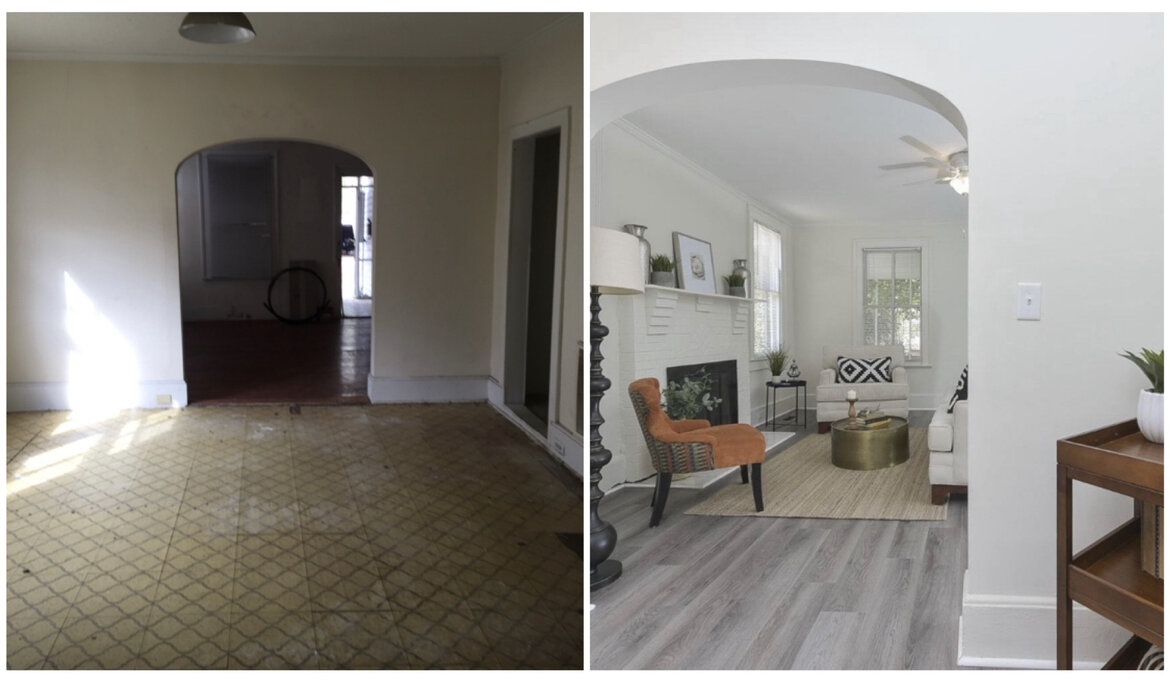
The honest version of what we are: we buy houses with our own funds, repair them, and either resell or keep them. We are not a brokerage and cannot list your house. If the house is in decent shape and you have the time and patience for repairs, showings and a financed buyer, an agent will very likely get you more, and we would rather say so now than after a walkthrough.
Where we tend to fit is the house that has not been touched in years, the one a lender will not lend against, and the situation where a deadline is doing the deciding. Greenville is next door and we buy there too, so if that is closer to you, here is how to sell house fast in Greenville SC.
What Working With Us Looks Like
- The house gets looked at in whatever state it is in. Nothing repaired, nothing tidied, nobody shown round.
- Furniture, boxes and anything else can stay put. Clearing it out afterwards is ours to deal with.
- The figure comes with the reasoning attached, so you can see what drove it.
- Title and settlement sit with a licensed South Carolina attorney rather than with us.
- Where a free county office is the better first call, that is what you will be told, even when it means no sale.
- Talking, viewing and putting a figure in writing are all free, and none of it commits you.
The Process in Three Steps
| Step | What happens | What you get |
|---|---|---|
| 1. Tell us where things stand | The address, the condition, and whatever has brought this to a head. If the taxes are behind, or the property has already been through a sale, raise it at this point, because it changes what remains possible. | A candid view on whether selling directly is sensible here, and a clear no if it is not. |
| 2. We look at it and give you a number | We view the property as it stands, contents included, then explain the offer and how we got there, and flag anything that has to be cleared before a closing can happen. | A number you can weigh against listing it, and a plain account of what still has to happen. |
| 3. Take it or leave it | Accept and a licensed South Carolina attorney picks up the title work and the settlement. Decline and the file is closed at our end. | A choice made on information rather than pressure, and no follow up if the answer is no. |
Nobody can hand you a completion date on a first call, and a buyer who offers one is guessing. Three things decide it and none of them belongs to us: what comes back on the title, how quickly a lender or lienholder issues its payoff figure, and the closing attorney’s own workload. If a redemption deadline is already running, that one belongs to the county calendar alone.
Find Out What the House Is Worth as It Stands
One conversation tells you where you stand, what has to be cleared first, and what the house is worth without a dollar spent on repairs.
Get Your Spartanburg Cash Offer
You do not need the house cleared out, the repairs quoted, or the taxes current before you ask. Those are the things we are used to working around.
Compare Your Options
Four routes worth weighing. Selling to a cash buyer is only one of them, and on a sound house it is rarely the strongest.
Areas We Buy In Around Spartanburg
We buy in the city, across Spartanburg County, and through the wider Upstate. As set out further up, some of these places are incorporated towns and some are unincorporated communities, which changes whose rules apply to a property but does not change whether we will look at it.
Spartanburg, Boiling Springs, Roebuck, Duncan, Lyman, Inman, Woodruff, Converse, Cowpens, Landrum, Moore, Pacolet, Greer, Wellford, Startex.
If your town is not on the list, call and ask. You will get a straight answer either way.
Why Spartanburg Owners Choose Peak Home Buyers
Peak Home Buyers is a family run home buying company rather than a national brand with a call center and a local phone number. Matt and Emily Hipp own it and answer the phone. Everything below can be checked.
- An address you can turn up at. 1122 Lady St, 3rd Floor, Columbia, SC 29201.
- Two owners, no call center. Matt and Emily Hipp handle their own enquiries.
- Older and harder properties are routine here rather than exceptional. Mill village houses, long vacancies, structural movement, outstanding code notices.
- Condition is never a precondition. Nothing needs fixing, cleaning or emptying first.
- A licensed South Carolina attorney closes every purchase and records the deed with the county.
- The purchase money is the company’s own, so nothing hinges on a lender approving a buyer.
Frequently Asked Questions About Selling a House in Spartanburg
Who buys houses for cash in Spartanburg, SC?
Peak Home Buyers, working from 1122 Lady St in Columbia, purchases throughout Spartanburg and the wider Upstate. It is Matt and Emily Hipp’s company, the funds behind each purchase are its own rather than a lender’s, and a licensed South Carolina attorney conducts every settlement. The number is (803) 991-0959.
My house was sold at the county tax sale. Can I still do anything?
Usually yes, if you are inside the twelve month redemption period. South Carolina allows the former owner, a buyer from that owner, or a mortgage or judgment creditor to redeem the property within twelve months of the sale by paying the taxes, penalties, costs and interest, and the interest rises each quarter through that year. Once the twelve months pass, the tax collector issues a deed to the bidder. Confirm your exact deadline with the office that publishes Spartanburg County tax sale procedures, because the date runs from the sale, not from when you found out.
The house sold for more than I owed. Where does that money go?
To you, but only if you claim it. The surplus above the taxes, penalties and costs is called the overage, and South Carolina law lets the former owner claim it from the county. It becomes payable ninety days after the deed is executed unless another claimant goes to court in the meantime. The county publishes a claim form. Call the tax collector’s office and ask whether an overage exists on the parcel.
Do I need city approval to work on the outside of my house?
Only in the two locally designated districts, Hampton Heights and Beaumont Mill Village, where the city’s review board considers exterior changes, additions and new construction, and a Certificate of Appropriateness has to come before a building permit. Converse Heights is a National Register district, which is a federal recognition rather than a local designation, and does not carry that review. Ordinary maintenance is not reviewed. Check the City of Spartanburg historic districts if you are unsure which applies.
Is my address inside the Spartanburg city limits?
Not necessarily. Boiling Springs, Roebuck, Converse, Arkwright, Saxon and several other communities with Spartanburg area addresses are unincorporated, meaning the county governs them and city rules do not apply. Duncan, Lyman, Inman, Woodruff and Landrum are separate incorporated towns. It affects code enforcement, city millage, and whether historic design review applies to your property.
I am over 65 and the property taxes keep going up. Is there anything I can do?
Possibly, and it is worth checking before you consider selling. South Carolina exempts the first fifty thousand dollars of fair market value from property tax for owners aged 65 or over, or totally and permanently disabled, or legally blind, on their primary residence. It is applied for through the county auditor rather than the assessor, which is where most people go wrong, and failing to apply waives it for that year. Call the Spartanburg County Auditor and ask whether it is on your parcel and what the filing deadline is.
Will my property taxes change if I move out and the house sits empty?
Yes. A home the owner lives in is assessed at four percent of value and other residential property at six percent, under the assessment ratio the state applies. The four percent rate does not follow the house automatically, and there is a duty to tell the assessor within six months of ceasing to be eligible, with a penalty for not doing so. Ask the county assessor what the bill becomes.
Do I have to disclose anything about lead paint?
If the house was built before 1978, which covers most of the older stock here, yes. Under the federal lead paint disclosure rule a seller has to disclose known lead based paint and hazards, hand over any records, provide the EPA pamphlet, attach the standard warning statement to the contract, and give the buyer a ten day opportunity to have the property inspected. The ten days can be varied if both parties agree in writing, and foreclosure sales are exempt. It does not stop a sale.
Will you buy a house that needs structural work?
Yes. Foundation movement, roof structure, old wiring and plumbing, and moisture damage are the normal condition of a lot of the older stock here rather than a deal breaker. Those are also the problems that stop a house passing an appraisal for a financed buyer, which is often why an owner ends up looking at a direct sale in the first place.
I have a code violation notice. Does that stop me selling?
No, but it has to be dealt with rather than ignored. Whether the city or the county is enforcing depends on whether the property is inside the Spartanburg city limits. An outstanding notice does not vanish at closing and can become a charge against the property that has to be cleared before title is clean, so mention it at the first conversation.
Do I have to clean the house out first?
No. Furniture, boxes, appliances and anything else can stay where it is, and clearing it is handled after closing. Mention it before you accept an offer so everyone understands what happens to the contents, and set aside anything that matters to you first.
How does a cash buyer make money if there are no fees or commissions?
By purchasing below what the property would fetch once it has been repaired and presented, then funding that work and the months of carrying costs before reselling or letting it. The gap between the two figures pays for the labor, the capital tied up, and the possibility that the resale disappoints. A house in decent order, with an owner who has time, will almost always do better through an agent.
Get a Cash Offer on Your Spartanburg House
You do not need to fix anything, clean anything, clear anything out, or bring the taxes current before you ask. You do not need to know yet whether selling is the right move. Working out where you stand is the part we do most often, and it is the part that costs nothing.
If a free county office is the better first call, that is what you will be told. If listing with an agent would put more money in your hands, you will hear that too, and if this is not a property we can take on you will hear it straight away rather than after three phone calls.
Get Your Spartanburg Cash Offer